Following the successful holding of the 1st Asia-Pacific Artificial Intelligence Education Conference in Fuzhou in 2025, the 2nd Asia-Pacific Artificial Intelligence Education Conference (AAIEC 2026) kicked off grandly in Fuzhou from May 23 to 25, 2026.
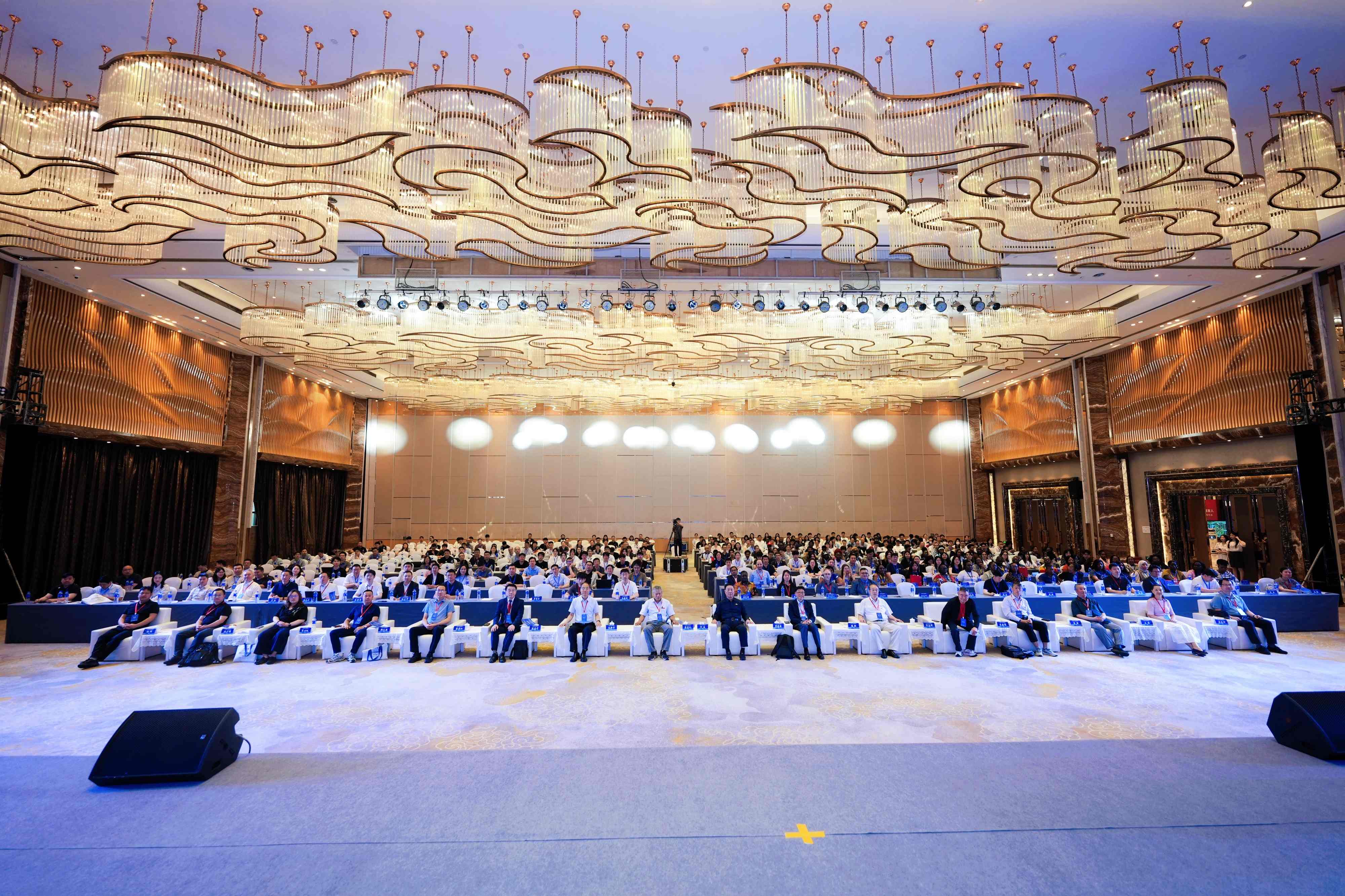
Centering on the in-depth integration of artificial intelligence and education, the conference gathered more than 1,000 distinguished guests including academicians, experts, university deans and industry leaders from home and abroad. Participants jointly explored innovative approaches to education in the AI era and promoted the joint development of the artificial intelligence education ecosystem across the Asia-Pacific region.
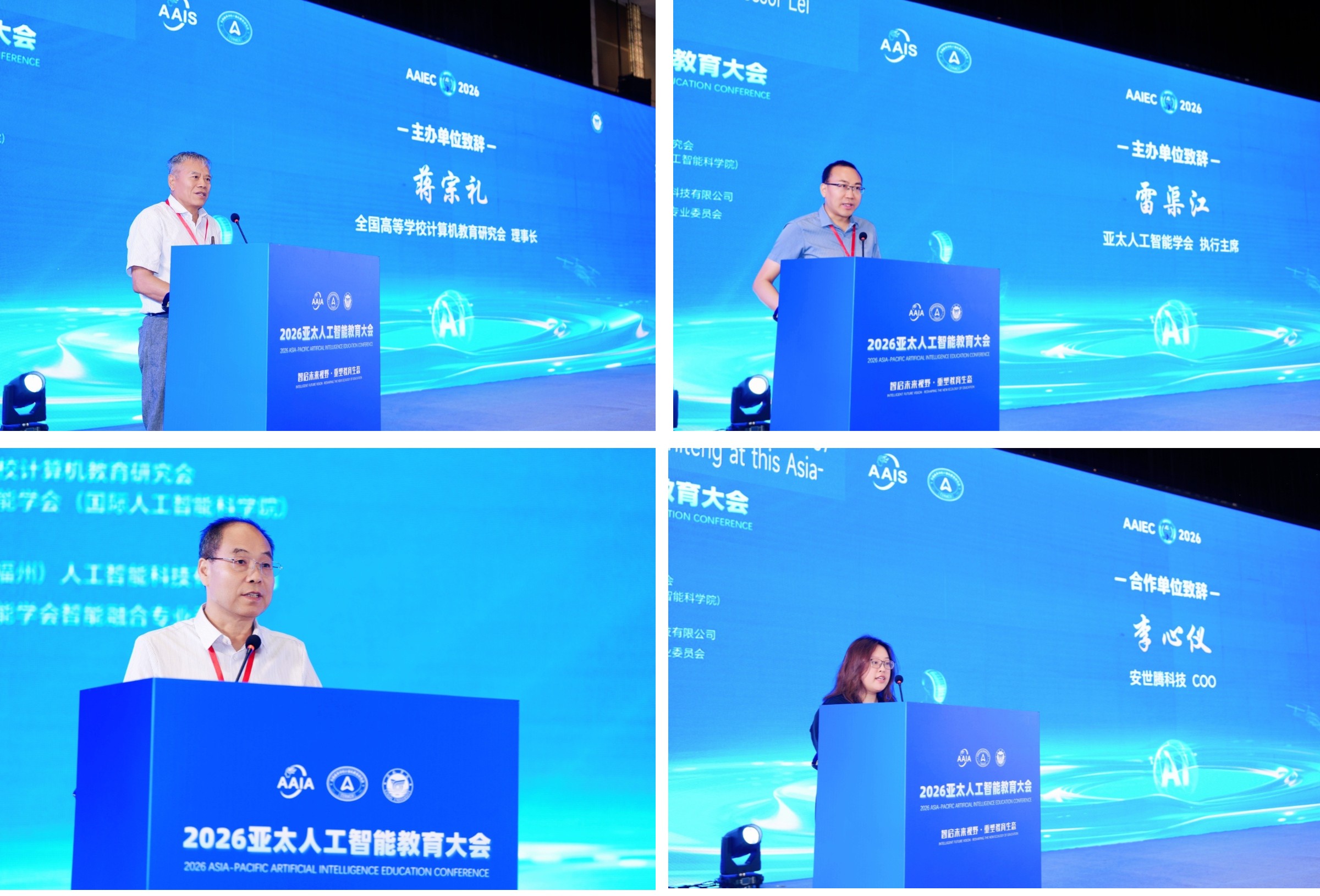
The opening ceremony featured speeches by representatives from the organizing parties. Jiang Zongli, Chairman of the China Society for Computer Education in Institutions of Higher Learning, and Lei Qujiang, Secretary General of AAIS, extended their congratulations on the conference. They elaborated on the contemporary significance of artificial intelligence education in the new era and called on academic and industrial communities to work together to advance the practical implementation of AI education. Da Xinyu, President of Sunshine University, delivered a speech on behalf of the undertaker, sharing the explorations and responsibilities of private universities in the field of artificial intelligence education. Li Xinyi, Chief Operating Officer of Anshiteng Technology, spoke as a representative of cooperating enterprises and illustrated the practical directions for enterprises to empower AI education.
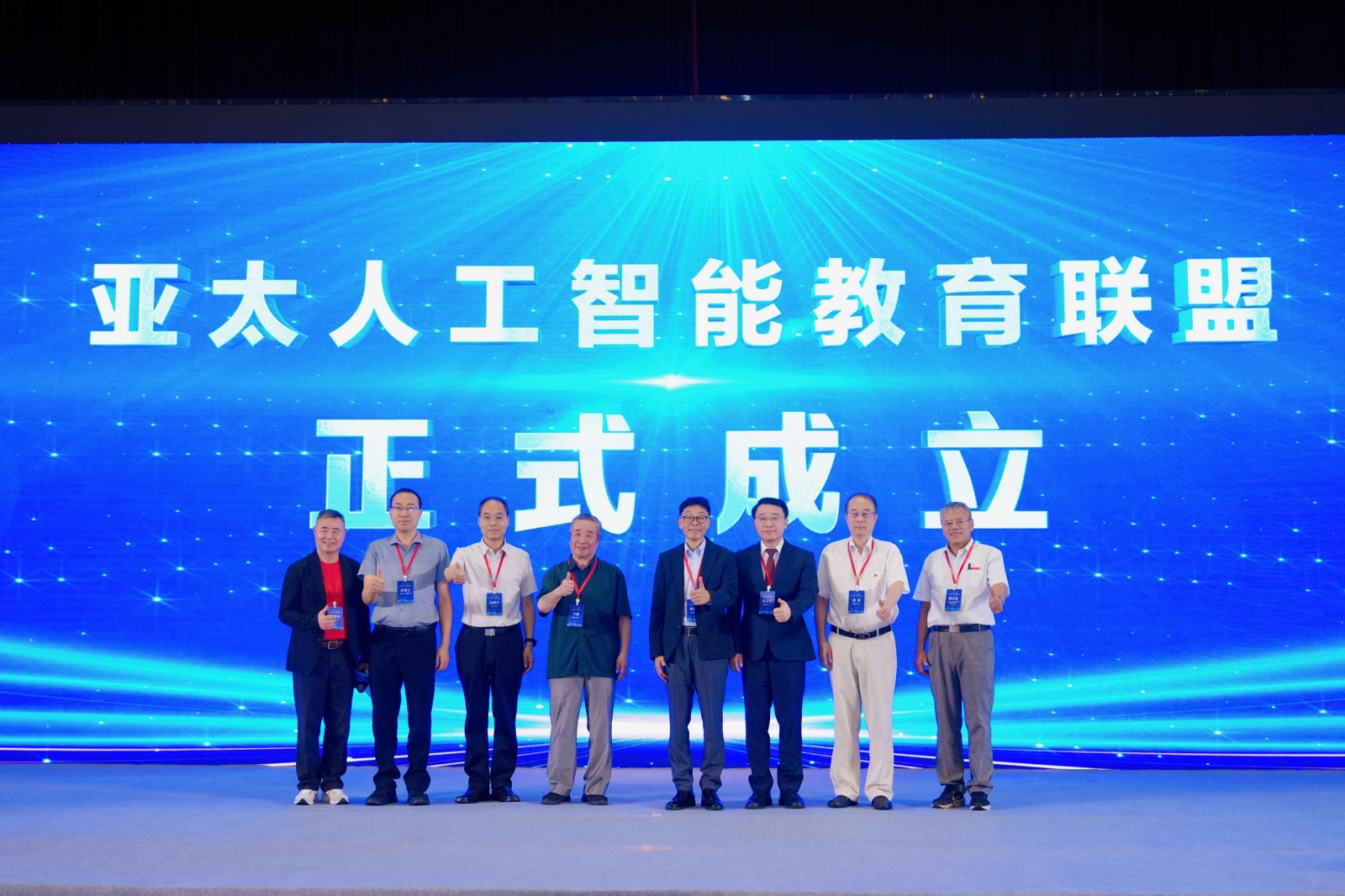
The launching ceremony of the Asia-Pacific Artificial Intelligence Education Alliance was held on site, building a brand-new platform for the coordinated development of regional AI education.
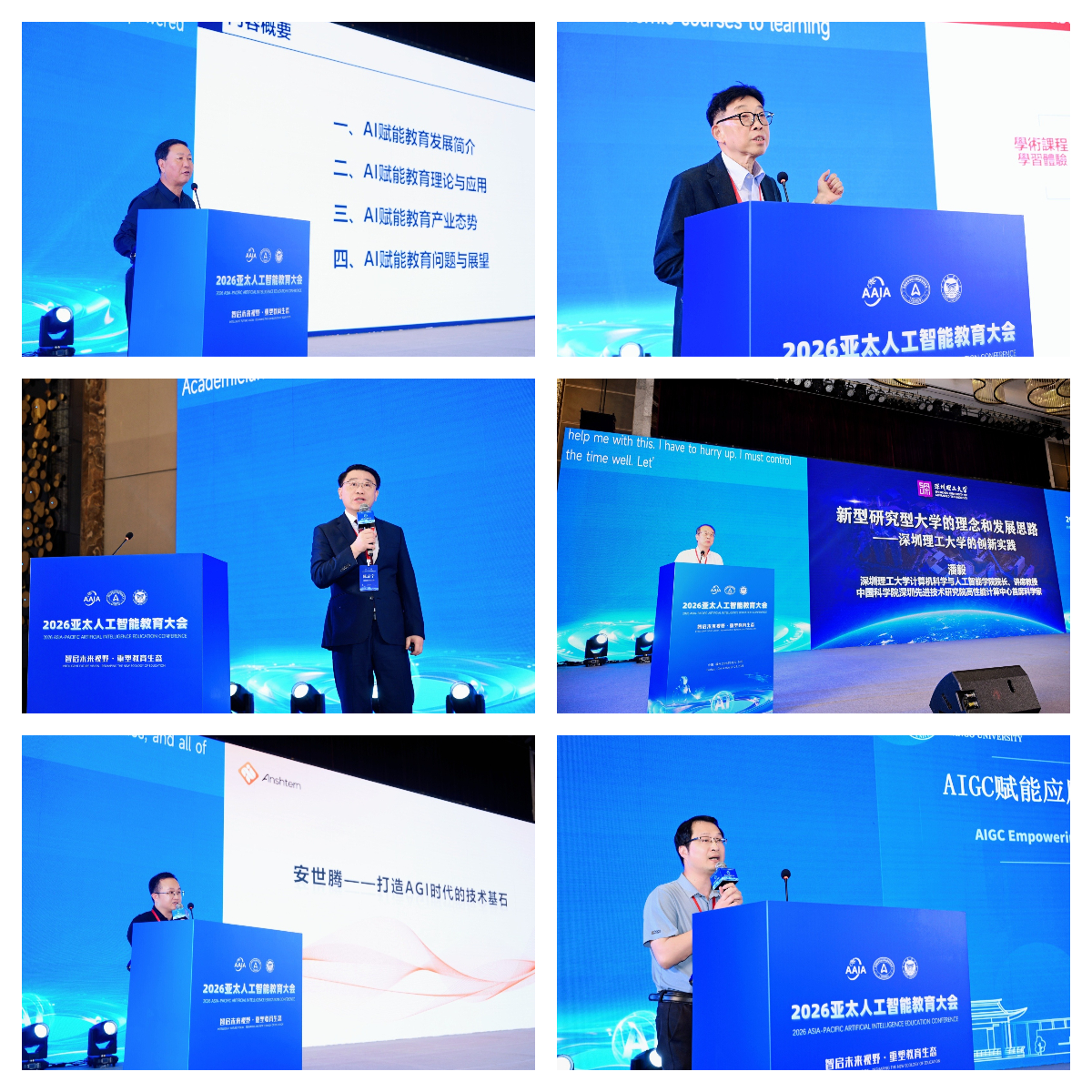
After the opening ceremony, the morning keynote sessions commenced, presided over by Professor He Yanxiang from Wuhan University. Academician He You of the Chinese Academy of Engineering delivered a speech titled AI Empowering Education, systematically analyzing the transformative logic of artificial intelligence technologies for education models and talent cultivation systems. Academician Cao Jiannong of the European Academy of Humanities and Sciences and Vice President of The Hong Kong Polytechnic University shared the practical achievements of AI-enabled education innovation at The Hong Kong Polytechnic University against the backdrop of Education 4.0. Academician Chen Zhining of the Singapore Academy of Engineering and Distinguished Professor at the National University of Singapore, together with Academician Pan Yi of the American Institute for Medical and Biological Engineering and Professor at Shenzhen Technology University, presented in-depth insights from the perspectives of cutting-edge technological innovation and research-oriented university development respectively. Lin Shaojin, Chief Technology Officer of Anshiteng Technology, and Huang Fenghua, Dean of the School of Artificial Intelligence at Sunshine University, interpreted opportunities and challenges in the construction of general AI technological foundations and the application of AIGC in university teaching based on industrial practices and operation-oriented university scenarios.
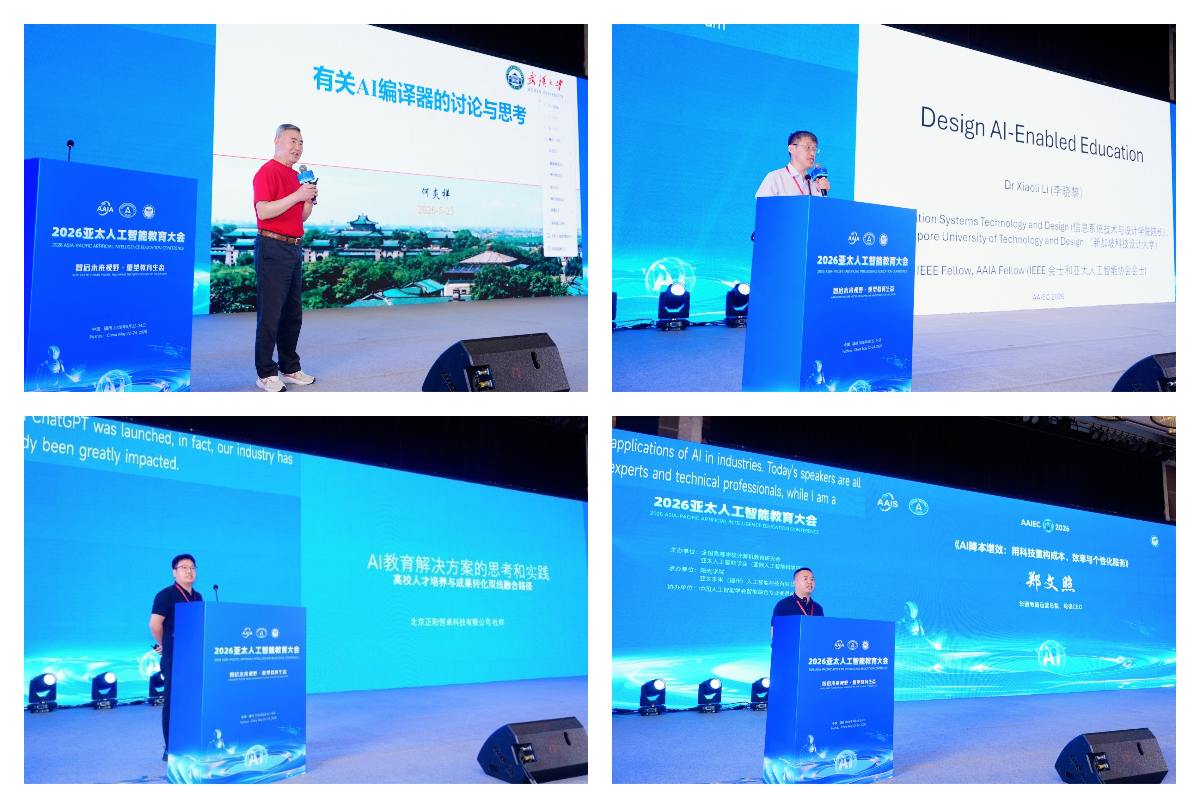
The afternoon forums' discussions focused on four major themes: innovation of underlying technologies, international education paradigms, integration of industry, academia and research, and implementation of educational services. Professor He Yanxiang, National Distinguished Teacher and scholar from Wuhan University, gave a presentation on AI Compilers, decoding core underlying technologies of artificial intelligence. Professor Li Xiaoli, Dean of the School of Information Systems Technology and Design at Singapore University of Technology and Design (SUTD), shared ideas on AI-enabled education design. Du Hui, R&D Director of Zhengyang AI, and Zheng Wenzhao, Chief Operating Officer of Huatu Education, shared practical experience from the perspectives of university talent training and AI-driven cost reduction and efficiency improvement in industrial implementation.
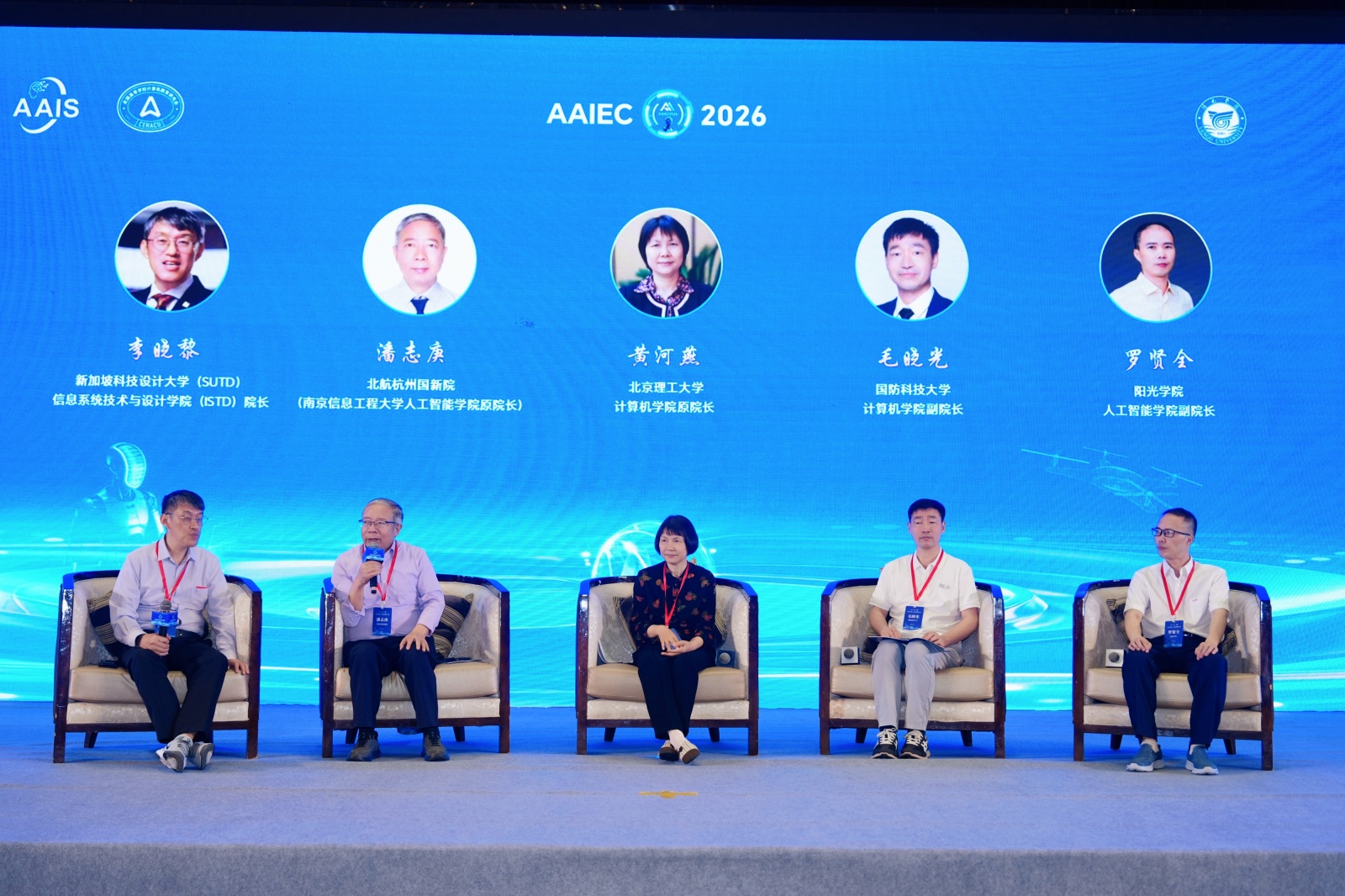
The Dean Roundtable Forum on Artificial Intelligence gathered five distinguished guests: Professor Li Xiaoli from Singapore University of Technology and Design, Professor Huang Heyan (Former Dean of the School of Computer Science, Beijing Institute of Technology), Professor Pan Zhigeng (Former Dean of the School of Artificial Intelligence, Nanjing University of Information Science and Technology), Professor Mao Xiaoguang (Vice Dean of the School of Computer Science, National University of Defense Technology), and Professor Luo Xianquan (Vice Dean of the School of Artificial Intelligence, Sunshine University). They engaged in in-depth discussions on university characteristics, talent cultivation, integration of industry and education, further education and employment, drawing continuous applause from the audience.
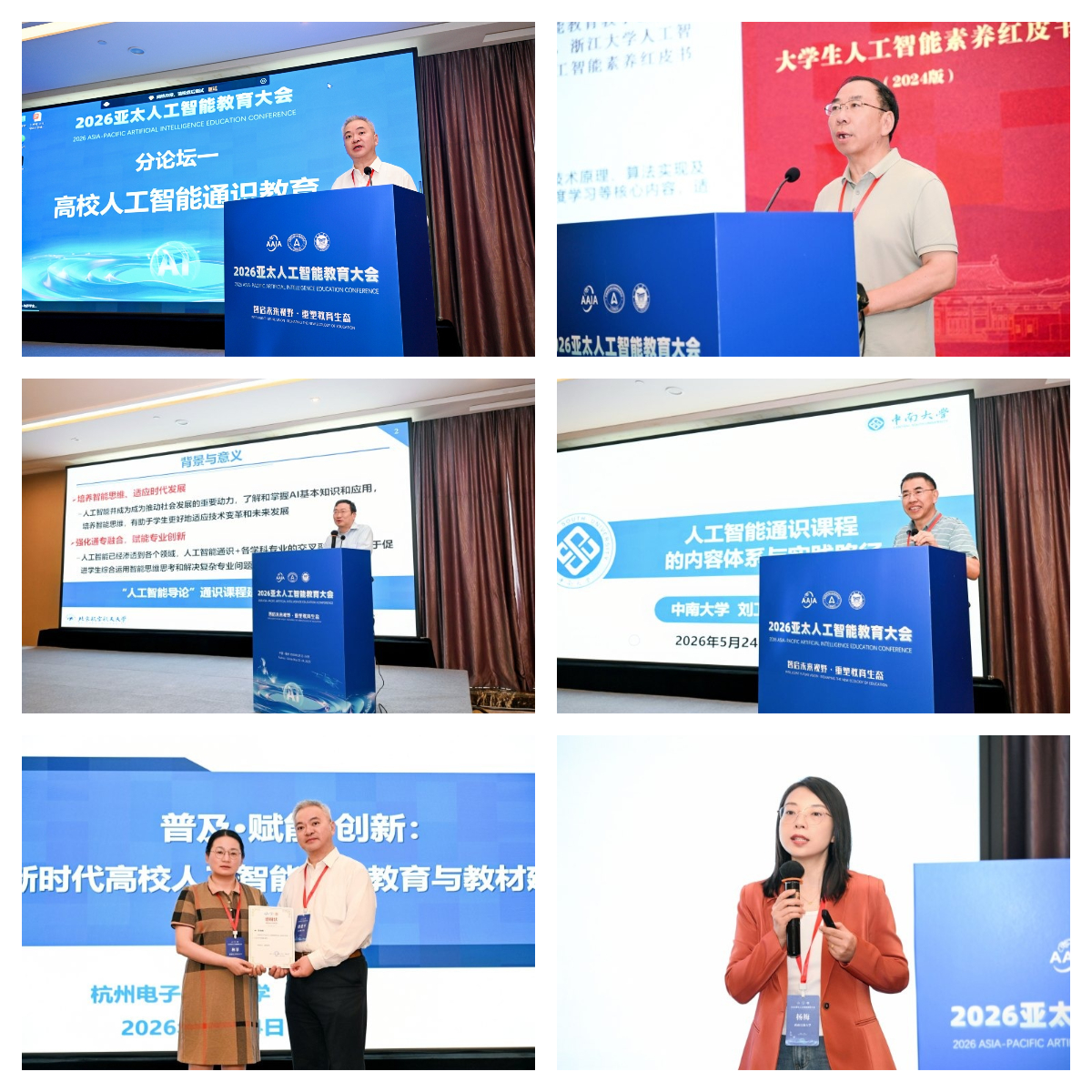
On the morning of May 24, the sub-forums of AAIEC 2026 were held. More than 30 experts conducted in-depth exchanges and interpretations on multiple topics, including general artificial intelligence education in universities, training of professional talents and construction of core AI courses, AI-enabled development of computer disciplines, integration of industry and education in AI, international exchanges and cooperation, as well as opportunities and challenges for AI education in application-oriented universities. Their insightful reports won wide acclaim.
Sub-forum 1: General Artificial Intelligence Education in Universities
Professor Hao Xingwei from Shandong University delivered a speech entitled Cultivating Students' Computational and Intelligent Thinking to Build High-quality General AI Courses. Combining years of teaching experience, he analyzed the internal connection between thinking cultivation and curriculum construction, earning warm responses from the audience.
Professor Wu Wenjun from Beihang University shared reflections and practices on general AI education in his speech Reflections and Practices on General Artificial Intelligence Education: From Computational Thinking to Intelligent Thinking, putting forward a systematic path for curriculum restructuring driven by the evolution of thinking.
Professor Liu Weiguo from Central South University systematically expounded the content system and implementation paths of general AI courses in the report Content System and Practical Paths of General Artificial Intelligence Courses, proposing a progressive curriculum construction approach with strong operability.
Professor Lin Fei from Hangzhou Dianzi University spoke on Popularization, Empowerment and Innovation: General Artificial Intelligence Education and Textbook Construction in the New Era. She emphasized that textbooks are the foundation of education and innovation is the driving force for development, and called for building an open and shared ecosystem of AI educational resources.
Professor Yang Mei from Southwest Petroleum University presented Hierarchical Design to Progressive Practice: Content System Design and Teaching Paths of University General AI Courses. Drawing on the characteristics of engineering universities, she proposed a hierarchical and progressive teaching model featuring both pragmatism and innovation.
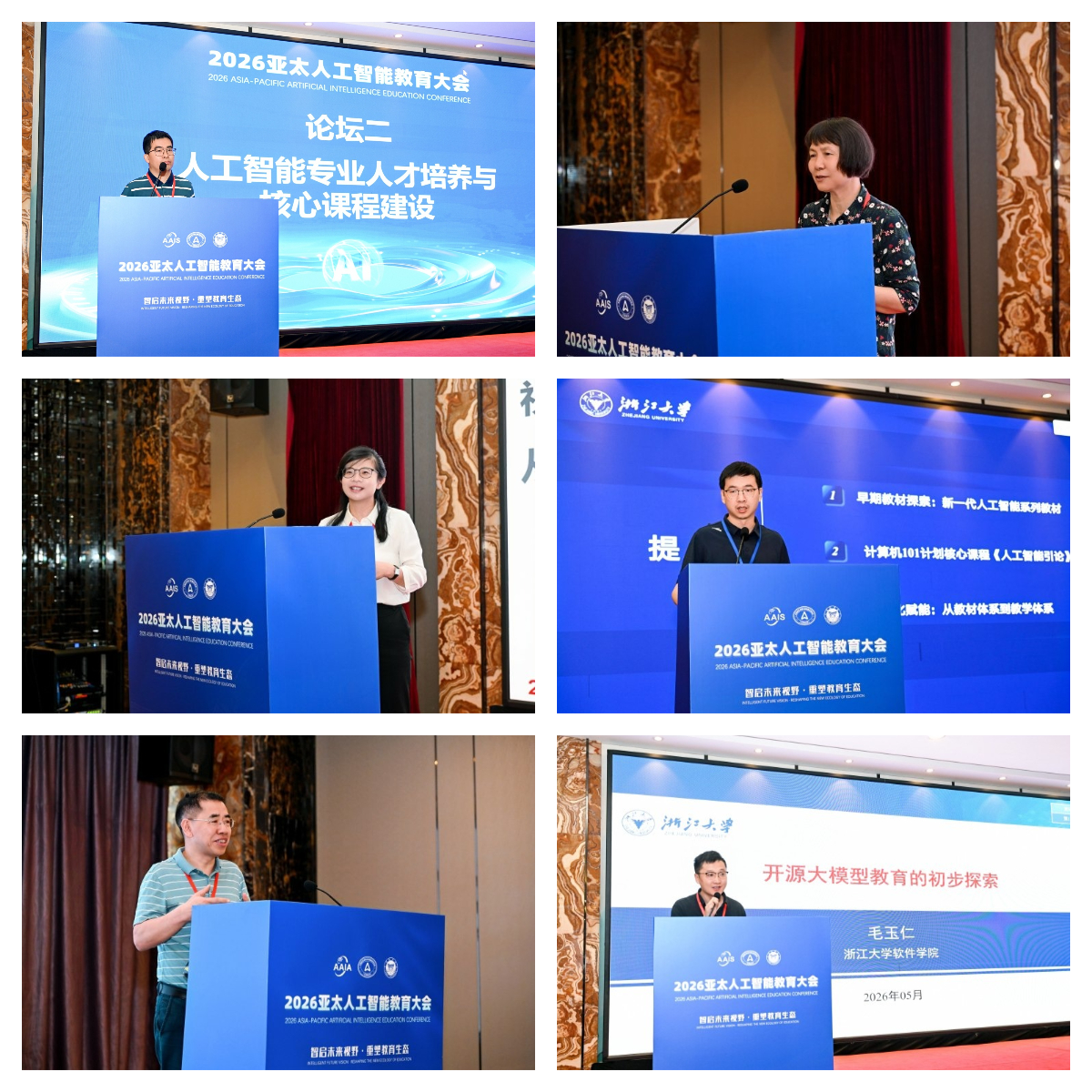
Sub-forum 2: Training of Professional AI Talents and Construction of Core Courses
Professor Huang Heyan from Beijing Institute of Technology gave a speech on Construction of First-class Courses and Textbook Innovation for Natural Language Processing. From the two dimensions of textbook content updating and curriculum system restructuring, she proposed a teaching reform plan adapting to the rapid development of natural language processing.
Professor Liu Jiaying from Peking University delivered a report titled Construction of Visual Art Courses: From Computer Vision Practice to an Initial Exploration of Computational Aesthetics, exploring the intersection of technology and art. Her speech combined academic depth with humanistic care and resonated widely among attendees.
Researcher Gan Leilei from Zhejiang University shared insights on Digital Intelligence Empowerment: Transforming AI Textbook Systems into Teaching Systems. Based on his experience in compiling multiple textbooks, he discussed how textbooks can better serve teaching and empower students.
Professor Wang Nannan from Xidian University presented the achievements of curriculum practice in Course Construction and Practice of Face Image Synthesis and Recognition for AI Talent Training, highlighting the value of applying cutting-edge technologies in teaching.
Researcher Mao Yuren from Zhejiang University talked about the preliminary exploration of education based on open-source large models, introducing how to build teaching platforms with open-source large models to stimulate students' independent learning and innovation capabilities.
Sub-forum 3: AI Empowering the Development of Computer Disciplines and Talent Training
Professor Xu Chao from Nanjing Audit University focused on the matching between industrial demands and talent cultivation in his speech Construction and Practice of AI-driven Talent Training System for Computer Majors with Industrial Characteristics, and put forward a new AI-powered talent training model.
Professor Mao Xiaoguang from the National University of Defense Technology made an in-depth analysis in Challenges and Reflections on Education in the Intelligent Era, responding to the educational changes brought by intelligent technologies from the aspects of teaching management, curriculum design and faculty development.
Professor Hong Wenxing from Xiamen University delivered a speech titled From Digital Literacy and Skills to Digital Leadership, pointing out that the ultimate goal of digital education is to cultivate interdisciplinary talents with leadership capabilities.
Professor Zhu Qiang from Zhejiang University explored new teaching modes in From Indoctrination to Evolution: Exploration of Active Learning Paths for Computer Majors Empowered by AI. He advocated breaking the boundaries of traditional teaching and guiding students to shift from passive reception to active inquiry with the help of AI technologies.
Associate Professor Wu Yonghui from Fudan University shared the reform practices of basic courses in Cultivating Computer Talents in the AI Era: C Language Textbook Construction and Curriculum Reform for Computational Thinking Training, stressing that basic courses should also keep pace with the times and integrate intelligent thinking.
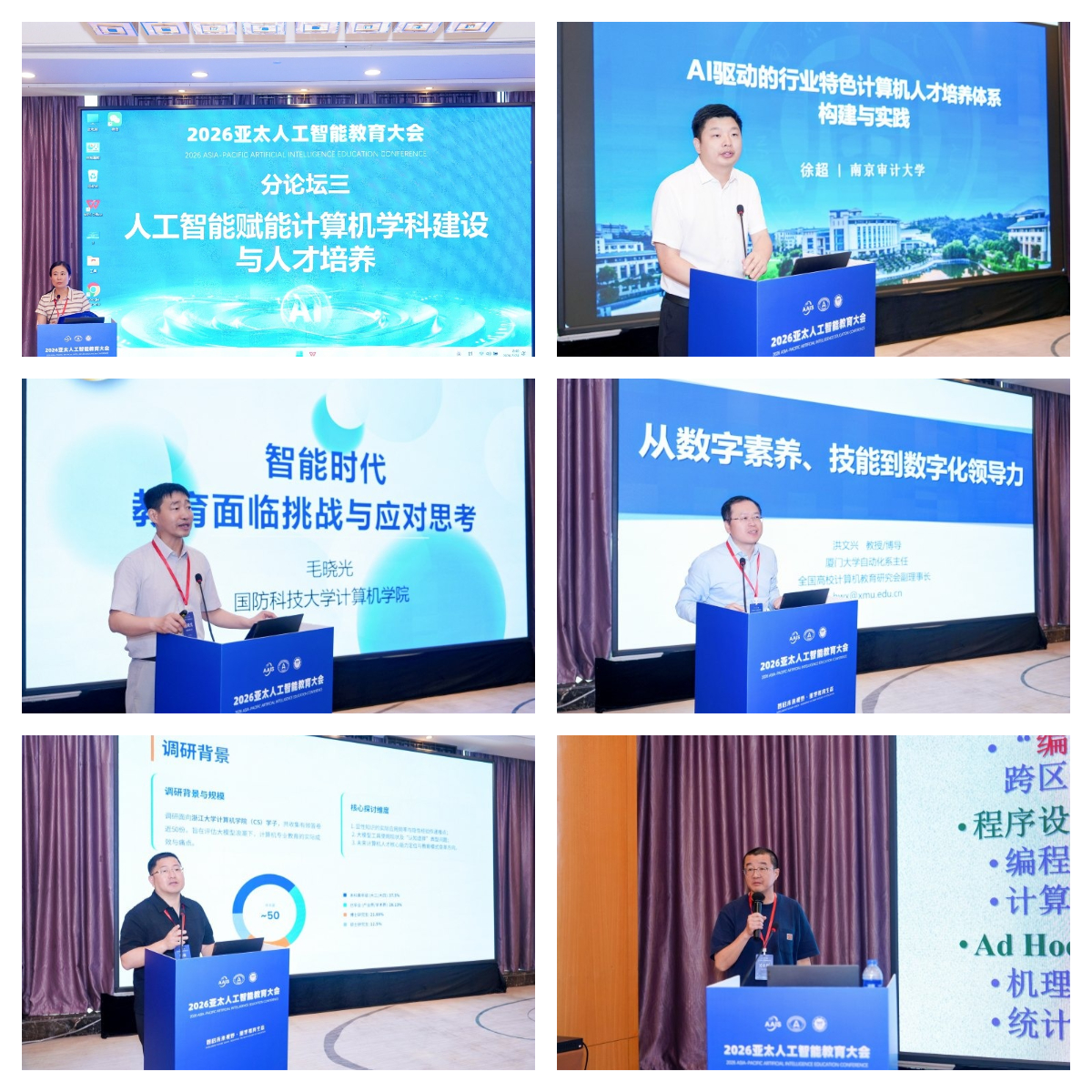
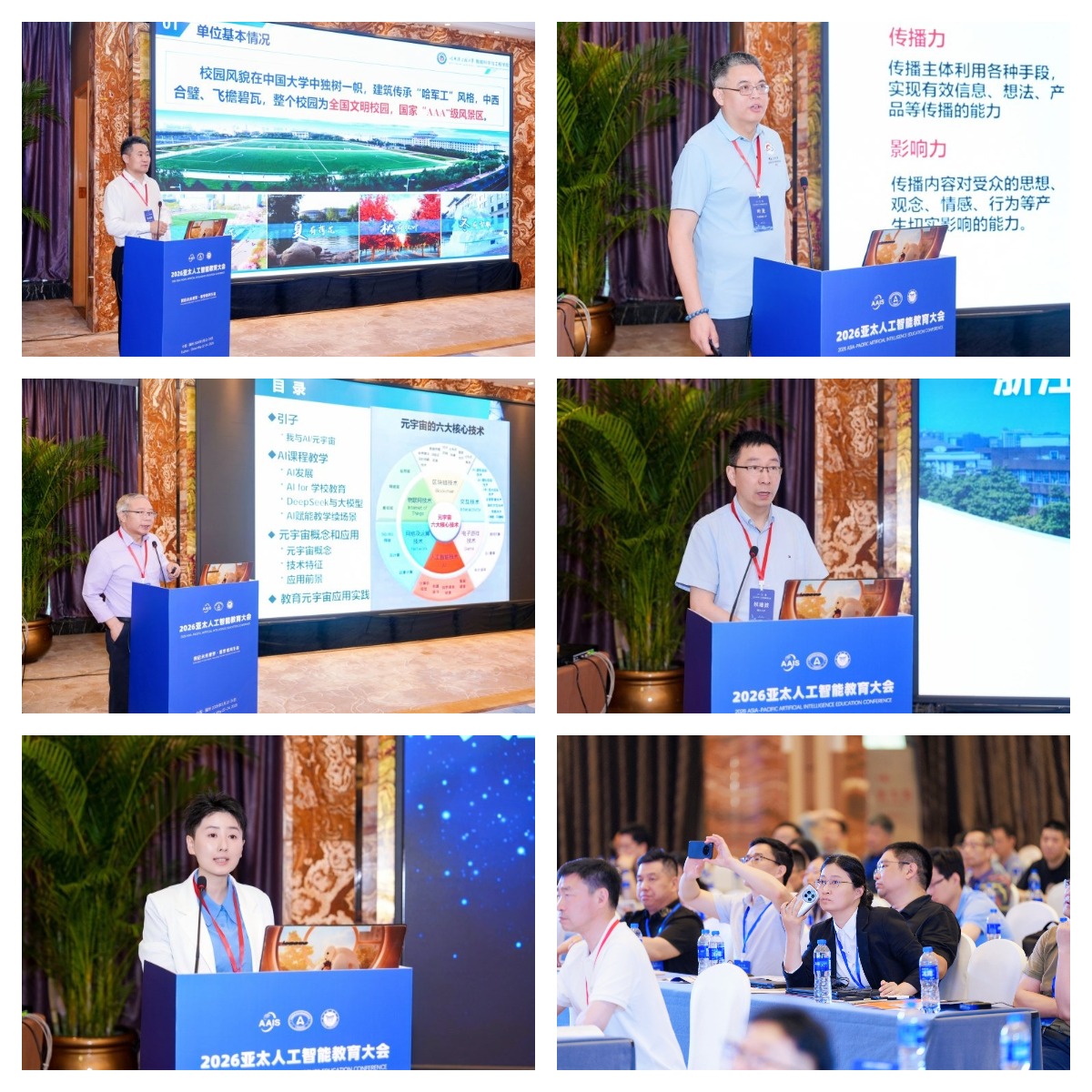
Sub-forum 4: Integration of AI Industry and Education: Faculty, System and Ecosystem Construction
Professor Cai Chengtao from Harbin Engineering University discussed the construction of competitive AI talent training systems for characteristic disciplines in his speech Reflections and Practices on Discipline Construction and Talent Training of Universities with Industrial Characteristics.
Professor Ye Long from Communication University of China shared thoughts on the transformation of media education in Reflections on Media Talent Training in the Era of Human-Machine Collaboration, suggesting cultivating interdisciplinary media talents equipped with human-machine collaboration capabilities.
Professor Pan Zhigeng from Beihang Hangzhou Global Innovation Research Institute looked into the application prospects of the metaverse in intelligent education in his report Educational Metaverse for Embodied Intelligence and Robotics Teaching.
Researcher Hou Dibo from Zhejiang University shared the ideas and practices of constructing majors related to embodied intelligence at Zhejiang University.
Professor Liang Zhen from Shenzhen University explored new paths for the integration of industry and education in Exploration of AI Industry-Education Integration Paths for Brain-Computer Interface Applications: From Faculty Collaboration to Ecosystem Construction, emphasizing the key role of multi-party collaboration in talent cultivation.
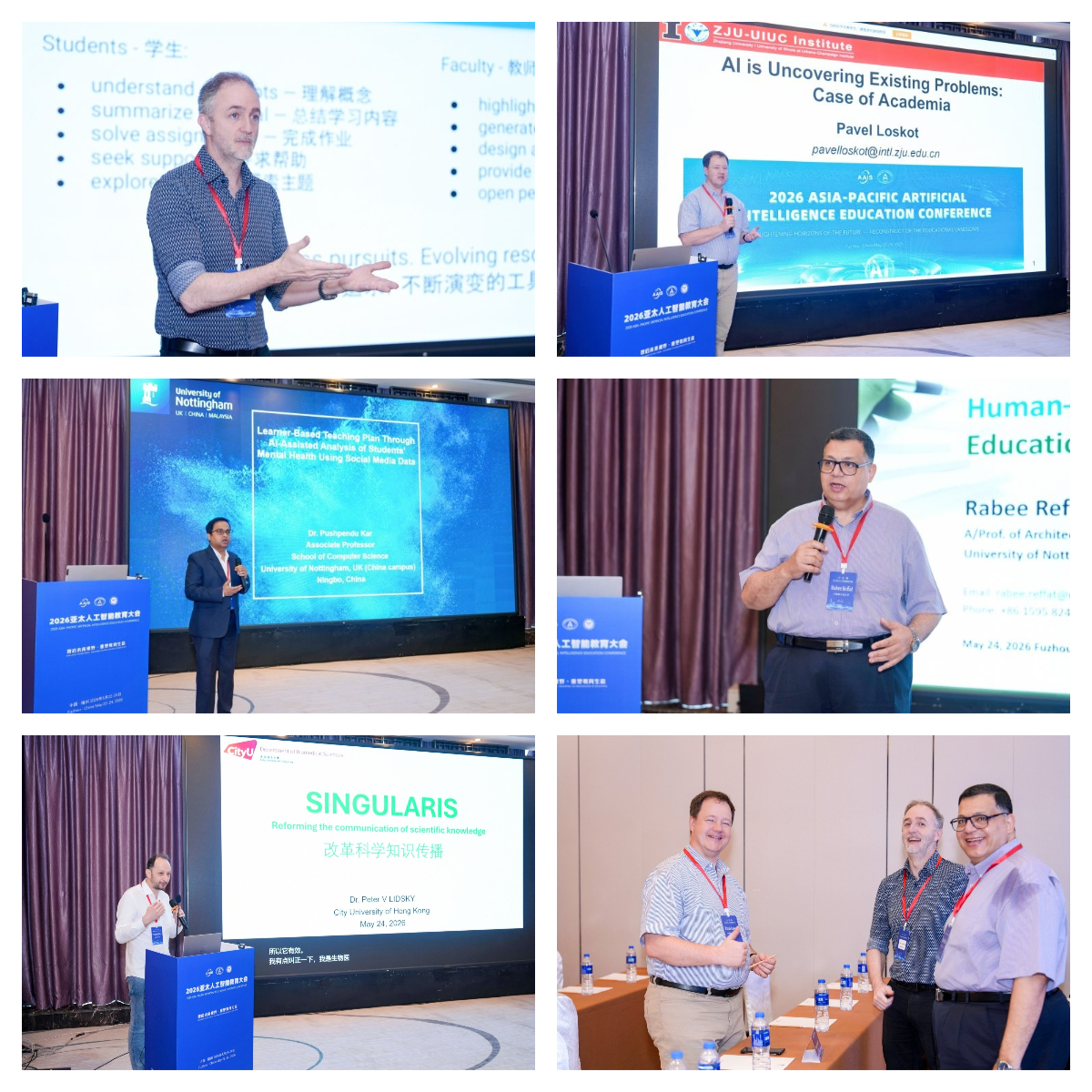
Sub-forum 5: International Exchanges and Cooperation on AI Education
Professor Olivier Marin, Tenured Professor at Sorbonne University in France, delivered a speech titled The Illusion of Intelligence: Teaching and Learning with Imperfect AI Agents. He examined the role of AI in education from a critical perspective and triggered in-depth reflections on "human-AI collaborative teaching".
Associate Professor Pavel Loskot from the University of Illinois Urbana-Champaign presented Artificial Intelligence Revealing Existing Problems: A Case Study of Academic Communities, pointing out that the rise of AI is prompting traditional academic communities to reflect on their inherent structural issues.
Professor Pushpendu Kar, Fellow of the Institution of Electronics and Telecommunication Engineers (IETE) and Chartered Engineer of the United Kingdom, shared the practical application potential of AI in mental health education in his speech AI-assisted Student Mental Health Analysis and Learner-oriented Teaching Programs Based on Social Media Data.
Associate Professor Rabee Reffat from the University of Nottingham Ningbo China explored the collaboration mechanism between humans and AI in design in Collective Intelligence in Human-AI Design Partnership, and proposed collective intelligence as a new design paradigm.
Assistant Professor Peter Lidsky from City University of Hong Kong shared the latest research achievements: adopting "nanopublications" to connect data into "argumentation graphs", so as to improve the efficiency of knowledge transmission for both humans and AI algorithms, providing brand-new tools for knowledge management and intelligent education.
As the academic feast drew to a close, an award ceremony was held in the evening of May 23 in Fuzhou. The ceremony aimed to recognize universities, enterprises, scholars and educators who have made outstanding contributions to artificial intelligence education, and pay tribute to all practitioners driving the development of the industry.
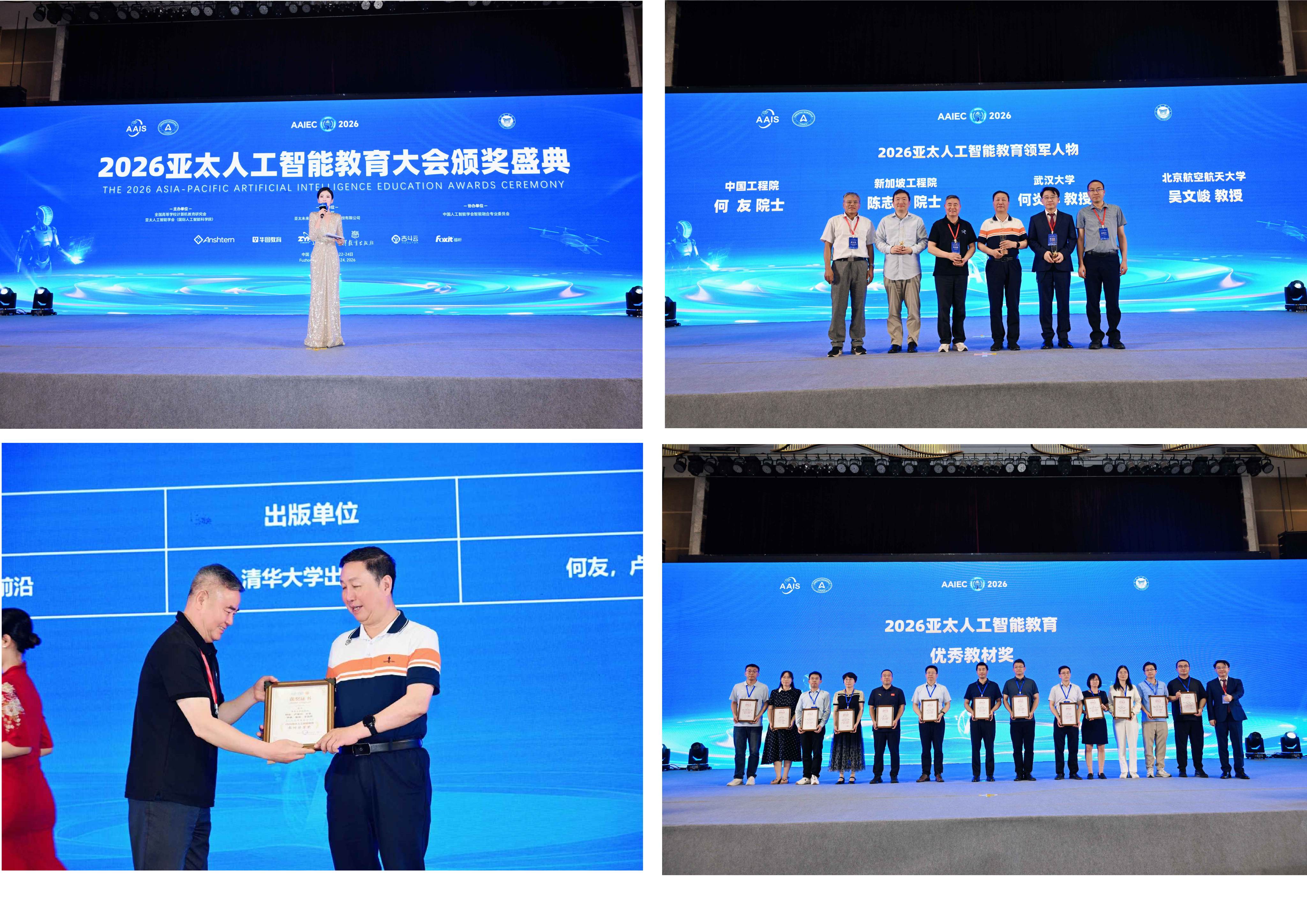
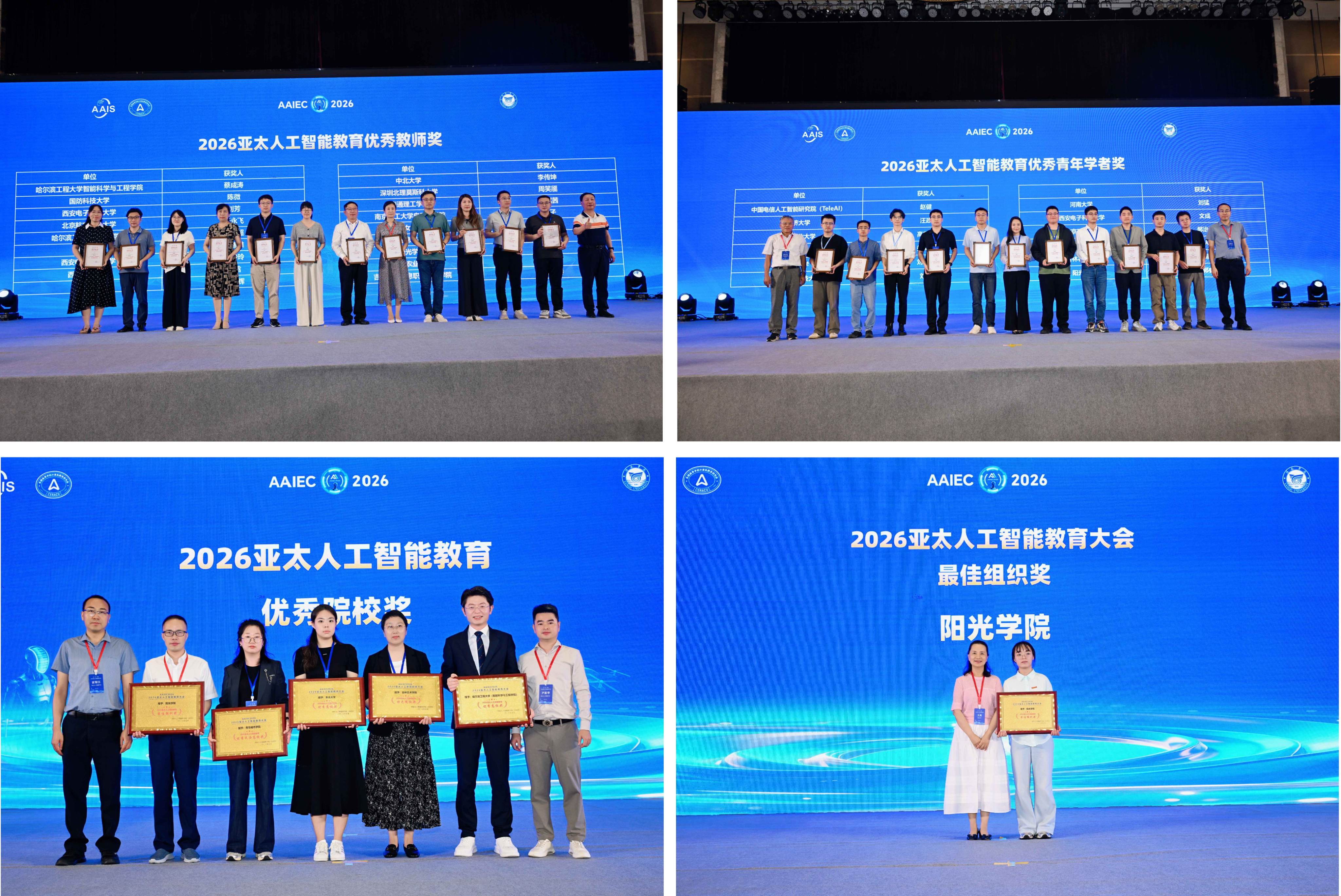
Award List of AAIEC 2026
1.2026 Asia-Pacific Artificial Intelligence Education Leading Figures
Academician He You (Chinese Academy of Engineering), Academician Chen Zhining (Singapore Academy of Engineering), Professor He Yanxiang (Wuhan University), Professor Wu Wenjun (Beihang University)
2.2026 Asia-Pacific Artificial Intelligence Education Outstanding Textbook Special Award
Frontiers of Artificial Intelligence Development published by Tsinghua University Press (Author: Academician He You)
3.2026 Asia-Pacific Artificial Intelligence Education Outstanding Textbook Award
13 experts including Professor Huang Tingzhu from University of Electronic Science and Technology of China
4.2026 Asia-Pacific Artificial Intelligence Education Excellent Teachers Award
18 teachers including Professor Cai Chengtao (Harbin Engineering University), Professor Chen Wei (National University of Defense Technology) and Professor Liu Fang (Xidian University)
5.2026 Asia-Pacific Artificial Intelligence Education Outstanding Young Scholars Award
12 experts including Zhao Jian (China Telecom AI Research Institute), Wang Zheng (Tongji University), Gao Xuehao (Northwestern Polytechnical University) and Lou Wenqi (University of Science and Technology of China)
6.2026 Asia-Pacific Artificial Intelligence Education Outstanding Universities Award
5 universities including Northeastern University and Harbin Engineering University
7.2026 Asia-Pacific Artificial Intelligence Education Best Organization Award
Sunshine University (the undertaker of the conference)
As a high-profile influential event in the field of artificial intelligence education across the Asia-Pacific region, the conference has built an important platform for academic exchanges, experience sharing and industrial cooperation. All participants agreed that the successful holding of the conference will further promote the in-depth integration of artificial intelligence and education, and boost discipline construction and innovative talent training in universities. The conference received strong support from leading enterprises in AI and education sectors, including Anshiteng Technology, Huatu Education, Beijing Zhengyang Hengzhuo Technology, Higher Education Press, Jidou Cloud and Foxit Software.
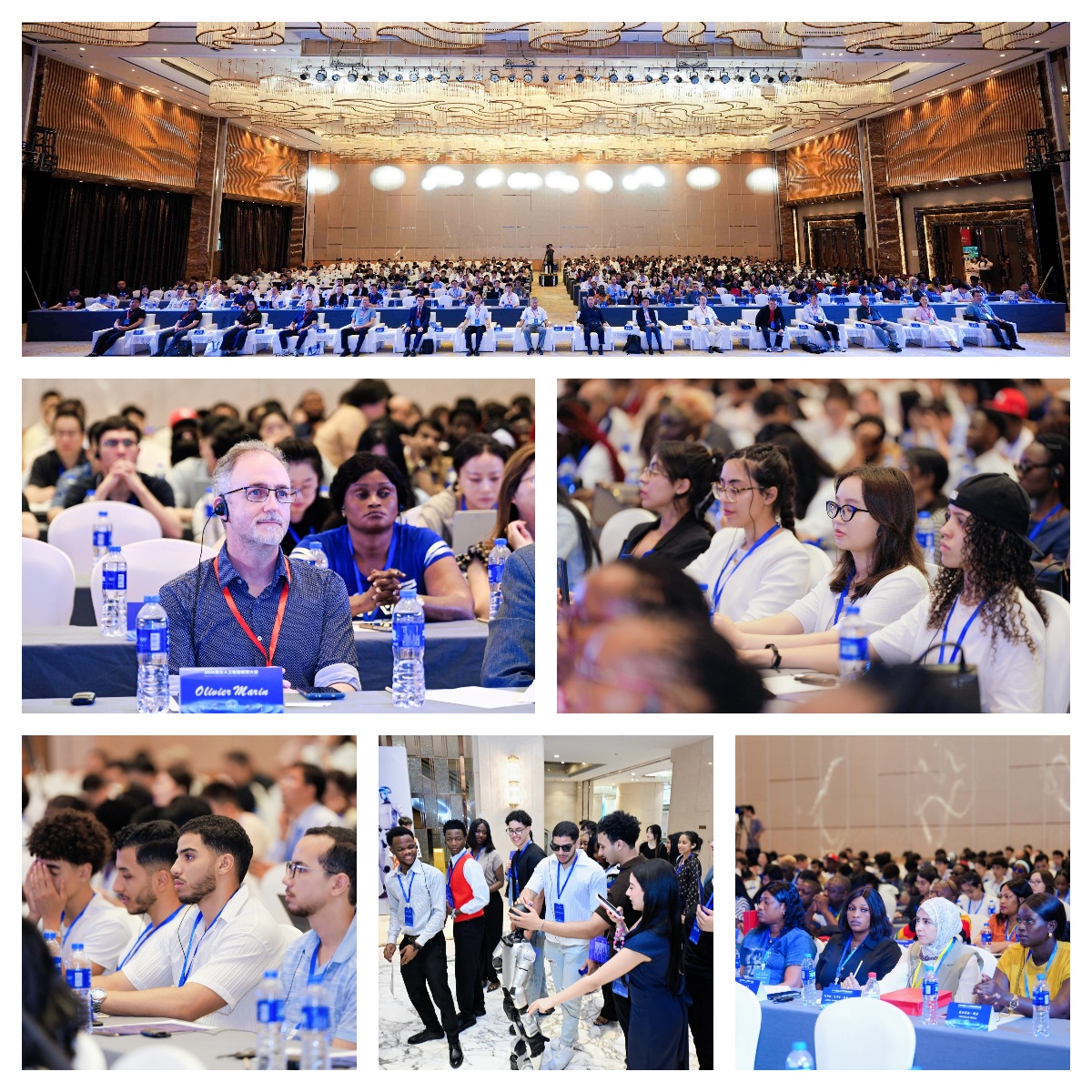
The Asia-Pacific Artificial Intelligence Education Conference will be held annually. The 3rd session will be held in 2027. Organizers welcome experts, scholars, educational institutions and industrial partners at home and abroad to continue to participate and jointly promote the high-quality development of the artificial intelligence education ecosystem in the Asia-Pacific region.
 International Academy of Artificial Intelligence Sciences (AAIS)